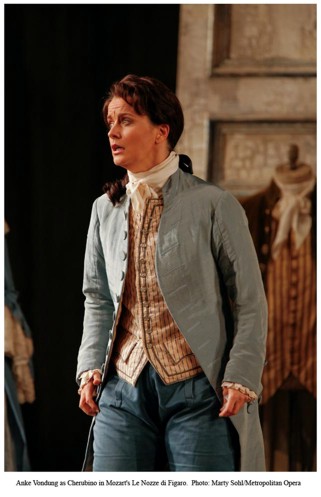
“Voi che sapete” Lorenzo Da Ponte (1749-1838)

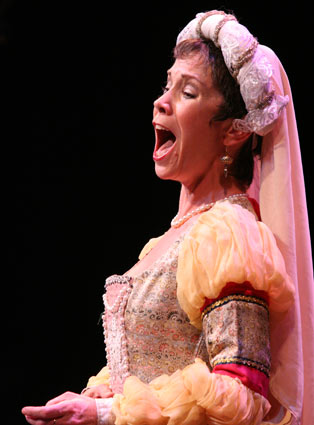
Mezzo-soprano aria from Mozart’s opera "Le Nozze di Figaro"
你們可知道”   () 罗兰素.达邦提 谱词
莫扎特歌剧”费加洛的婚礼”女中音咏叹調
Tr. YK Chan 陈耀国譯
Performed by Maria Ewing (My choice as the best rendition of Cherubino's aria):
http://www.youtube.com/watch?v=Q-e0fHUoKD8&feature=related
By Federica von Stade: http://www.youtube.com/watch?v=gA3yuwDq2H4
Voi che sapete che cosa e amor,               你們可知道愛是甚麼,
Donne, vedete s'io l'ho nel cor.               女士們,看看我是否心中有愛吧。
Quello ch'io provo vi ridiro,               我要告訴你們我现在的感覺,
E per me nuovo, capir nol so.               我是新進此境,又一無所知。
Sento un affetto, pien di desir,               我有情感,充滿慾望,
Ch'ora e diletto, ch'ora e martir.               有時暢快,有時悲痛。
Gelo e poi sento l'alma avvampar,               我覺得冰冷又覺得我的靈魂燃燒着。
E in un momento torno a gelar.               一刻間我又化為冰塊。
Ricerco un bene fuori di me,               我尋求出意的柔情,
Non so ch'il tiene, non so cos'e.               我不曉得如何攫得它,也並不曉得它是甚麼!
Sospiro e gemo senza voler,                     我雖不想但仍在嘆息及哀痛,
Palpito e tremo senza saper,               我不隨意地心跳和發抖,
Non trovo pace notte ne di,                          日夜都無法安寧,
Ma pur mi piace languir cosi.               但是我仍寧願如此衰弱下去。
Voi che sapete che cosa e amor,               你們可知道愛是甚麼,

Donne, vedete s'io l'ho nel cor.            女士們,看看我是否心中有愛吧。

“Largo al factotum” Cesare Sterbini (1784-1831)

“给这亇打杂让路”   (意) 奇沙里. 斯塔尓賓里 譜詞 

Baritone aria from Rossini’s opera “Il Barbiere di Silviglia” 

罗西尼歌剧”西维亚的理发師”男中音咏叹调 

Performed by Hermann Prey: http://www.youtube.com/watch?v=rmTcmBn56Jk&feature=related 

By John Rawnsley: http://www.youtube.com/watch?v=Dq_0wPYFp9A 

ByTae-Joong Yang: http://www.youtube.com/watch?v=Z6uSR1VrYl0&feature=related 

JUST FOR FUN– 

By Woody Woodpecker (cartoon): http://www.youtube.com/watch?v=6Jv3lL6imzU&feature=related 

By Deanna Durbin: http://www.youtube.com/watch?v=Mol_ttm6uVI&feature=related 

You can sing along Karaoke: http://www.youtube.com/watch?v=mMLbs1mQNYU&feature=related 

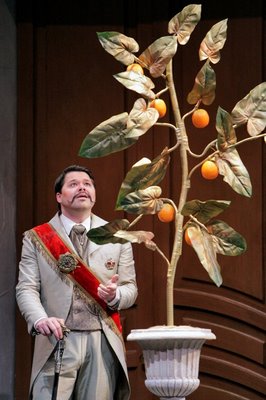
Baritone Jeffrey Mattsey as "The Barber of Seville"

Largo al factotum della città. 

Presto a bottega che l’alba è già. 

Ah, che bel vivere,  

che bel piacere 

per un barbiere di qualità! di qualità! 

Ah, bravo Figaro! 

Bravo, bravissimo! 

Fortunatissimo per verità! Pronto a far tutto,

la notte e il giorno sempre d’intorno in giro sta. 

Miglior cuccagna per un barbiere, 

vita più nobile, no, non si da. 

Rasori e pettini 

lancette e forbici, 

al mio comando 

tutto qui sta. 

V’è la risorsa, 

poi, del mestiere 

colla donnetta… col cavaliere… 

Tutti mi chiedono, tutti mi vogliono, 

donne, ragazzi, vecchi, fanciulle: 

Qua la parrucca… Presto la barba… 

Qua la sanguigna… 

Presto il biglietto… 

Qua la parrucca, presto la barba, 

Presto il biglietto, ehi! 

Figaro! Figaro! Figaro!, ecc. 

Ahimè, che furia! 

Ahimè, che folla! 

Uno alla volta, per carità! 

Ehi, Figaro! Son qua. 

Figaro qua, Figaro là, 

Figaro su, Figaro giù, 

Pronto prontissimo son come il fulmine: 

sono il factotum della città. 

Ah, bravo Figaro! Bravo, bravissimo; 

a te fortuna non mancherà. 

Tr. YK Chan  陳耀國譯

给这亇城市的打杂
 
他要趕到店里因为天已亮了。
 
呀,多好的生活,

多快慰的

一亇顶瓜瓜、顶瓜瓜理发師!

啊,喝采你费加洛!

喝采,最喝采!

真是一亇最好运的人!

随时準备好做任何事,

日与夜,

时常马不停蹄,

比理发師更自在,

更高尚的生活,是不会有的。

剃刀与梳子,

刺血針与剪刀,

为我所用

样样都齐全。

这些道具

全是我行业中用的。 

为女仕们…为男仕们

所有人都问及要我,所有人

想要求我的服务,

女仕们男兒汉老年人,

少女们 

这儿是假发…

胡子剃好了…

这儿是水蛭…

发票做好了

这儿是假发,胡子剃好了,

发票做好了,哎!

费加洛 费加洛 费加洛

哎哟,那么烦忙!

哎哟,那么一大堆人!

每次一人來,我請請你!

呀,费加洛!我到,

费加洛在这儿,费加洛在那儿,

费加洛上,费加洛下,
 
快些又更快些,我有如 

 迅雷:

我是這亇珹市的打杂,

啊,喝采你费加洛!喝采你, 

喝采你, 

你永不会缺运!

“Ebben? Ne andrò lontana” Luigi Illica (1857-1919)

好吧? 我就远走高飞”         () 路易治.意力卡 谱词 

“好吧? 我就远走高飞”

 Soprano aria from Alfredo Catalani‘s opera La Wally

卡塔阑尼歌剧“菈娃莉”女高音咏叹調

Performed by Renata Tebaldi:

1953 http://www.youtube.com/watch?v=UIVgcKNdd1w&feature=related

1969 http://www.youtube.com/watch?v=FdiUmFiVY4k&feature=related

By Maria Callas: http://www.youtube.com/watch?v=uyXQz_Rtt4M&feature=related

By Wilhelmenia Wiggins Fernandez: http://www.youtube.com/watch?v=2hsmoo97CVA

By Yolanda Rhodes: http://www.youtube.com/watch?v=y8iyp4UMW0k&feature=related

Tr. YK Chan 陈耀国译

Ebben? Ne andrò lontana,                                    好吧我就远走高飞
Come va l’eco della pia campana,                   
好像虔诚教堂鈡声的迴音一样的跑掉,
Là, fra la neve bianca;                          
那兒,在白雪中;
Là, fra le nubi d’ôr;                                       
那兒,在金黄的云里;
Laddóve la speranza, la speranza                    
在那兒的希望,希望
È rimpianto, è rimpianto, è dolor!             
是悔恨是悔恨是悲伤

O della madre mia casa gioconda,                    噢,从我妈喜乐的房子,
La Wally ne andrà da te, da te               
菈娃莉快要離开你,離开你
Lontana assai, e forse a te,                            
远远地,可能对你,
E forse a te, non farà mai più ritorno,           
可能对你,永不再回归,
Nè più la rivedrai!                                             
也永不再見到你!
Mai più, mai più!                                         
永不,永不!

Ne andrò sola e lontana,                                我就独自远走高飞
Come l’eco è della pia campana,                   
好像虔诚教堂鈡声的迴音一样,
Là, fra la neve bianca;                          
那兒,在白雪中;
Ne andrò, ne andrò sola e lontana!                      
我走了,我独自远走高飞了!
E fra le nubi d’ôr!                                       
往金黄的云里去!

《醉花阴》* (宋) 李清照

Tune: “Drunk under the Shade of Flowers”          Li Qingzhao (1084-1156) 

薄雾浓云愁永昼,瑞脑消金兽。
佳节又重阳,玉枕纱厨,半夜凉初透。
东篱把酒黄昏后,有暗香盈袖。
莫道不消魂,帘卷西风,人比黄花瘦。

Tr. YK Chan 陈耀国译 

Worries shroud me like thin mists and heavy clouds all day long,

Incense in the bronze burner will soon be gone.

Another fine Chongyang Festival again,

 midnight chill encroaches this jade pillow and canopied bed, where I’m torn.

Wine in hand by the mum grove after dusk,

  a subtle fragrance permeates to adorn.

Isn’t it not a time to yearn? Window drape undulates in frigid breeze;

  to the yellow flow’r I’m more gaunt.

__________

* For a video exposé in Mandarin, see http://www.youtube.com/watch?v=1GzrlmYRjmg

“O mio babbino caro” Giovacchino Forzano (1884— 1970)

Soprano aria from Puccini’s opera “Gianni Schicchi”

Sung by Montserrat Caballé: http://www.youtube.com/watch?v=dI17VdRfCek

by Renata Scotto: http://www.youtube.com/watch?v=tofdd1MGdaY

by Teresa Stratas: http://www.youtube.com/watch?v=CEUz2a0MeD0

by Liping Zhang:   http://www.youtube.com/watch?v=JT3LNeYqt4Q&NR=1

噢,我親愛的爹”               () 祖法奇奴.佛散奴 谱词

普茨尼歌剧”尊安尼.西奇奇”的女高音詠叹调

Tr. YK Chan 陈耀国译

Ponte Vecchio su l'Arno, Firenze 弗兰斯城阿爾奴河上的古桥

O mio babbino caro 噢,我親愛的爹
Mi piace, è bello, bello 我喜欢他,他是漂亮、漂亮的。

Vo’ andare in Porta Rossa 我想去玫瑰门珠宝店
a comperar l’anello! 买指環!
Sì, sì, ci voglio andare! 是的,是的,我想去那兒!
e se l’amassi indarno,
又假如你不成全我對他的爱,
andrei sul
Ponte Vecchio, 我会到古桥上,
ma per buttarmi in
Arno! 投进阿爾奴河!
Mi struggo e mi tormento! 我在苦难中虛耗受罪!
O Dio, vorrei morir!
神啊,我想死去!
Babbo, pietà, pietà! 爹,憐恤憐恤我吧!

“Ombra mai fù” Silvio Stampiglia (1664-1725)

(adapted from Giovanni Bononcini 1670-1747)
“从未有过的影子”          (意) 西维奧.斯潭皮基利亚
跟据邦农茨尼的谱詞改编
Originally a soprano-castrato aria from Handel’s opera “Serse”
(now sung by a counter-tenor or mezzo-soprano)
韓德尔歌剧”学赛”原为宫割-女高男喉咏叹调
(今为高腔男高音或女中音所唱)

Performed by Cecilia Bartoli (mezzo-soprano):
http://www.youtube.com/watch?v=MugXdU-h6UU
By David Daniel (counter-tenor) with ricitativo intro:
http://www.youtube.com/watch?v=wa1e49KLXNU&feature=related

Ombra mai fù

di vegetabile,

cara ed amabile,

soave più.

Tr. YK Chan  陳耀国譯

从未有过的影子

於树下

是这般親切可爱

及更温和的。

“Una furtiva lagrima” Felice Romani (1788 — 1865)

Tenor aria from Donizetti’s opera “L’elixir d’amore”
Sung by Caruso:  http://www.youtube.com/watch?v=t936rzOt3Zc
By Nicolai Gedda: http://www.youtube.com/watch?v=3qfGQUFfQyU
By Joseph Schmidt:  http://www.youtube.com/watch?v=FD-yzw7ExY4&feature=related
Una furtiva lagrima
negli occhi suoi spuntò:
Quelle festose giovani
invidiar sembrò.
Che più cercando io vo?
M'ama! Sì, m'ama, lo vedo. Lo vedo.

A furtive tear

Un solo instante i palpiti
del suo bel cor sentir!
I miei sospir, confondere
per poco a' suoi sospir!
I palpiti, i palpiti sentir,
confondere i miei coi suoi sospir...
Cielo! Si può morir!
Di più non chiedo, non chiedo.
Ah, cielo! Si può! Si, può morir!
Di più non chiedo, non chiedo.
Si può morire! Si può morir d'amor.
一點隐秘的淚滴”       () 菲里茨.罗曼尼 譜词
當尼薩蒂歌劇"爱之灵药"男高音詠叹调

Tr. YK Chan 陈耀国译

一點隐秘的淚滴

从她的眼晴湧出:

似乎那些好玩的少女

使她妒忌。

我还要再寻求甚麼? 

我还要再寻求甚麼?

她爱我!是的,她爱我,我見得。  我見得。


一刻间我可感觉到 在她美丽心中的脉搏!

我的感叹  一點兒与她的叹息混在一起! 

我感觉到她的心脉,

她那心脉 和我跟她的叹息交溶在一起


 天啊!是的,我会死去!

我不再要求甚麼,不再要求。

天啊!是的!是的,我会死去!

我不再要求甚麼,不再要求。

是的,我能死去!

是的,我会为爱情而死。

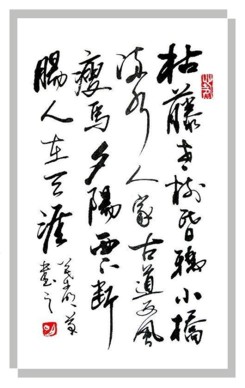
“天淨沙”: 秋思 (元) 馬致遠

In the tune of "Pristine Sand under Heaven": Fall Meditation
by Ma Zhiyuan (1250-1321)

枯藤老树昏鸦,

小桥流水人家;

古道西风瘦马,

夕阳西下,

断肠人在天涯!

Tr. YK Chan  陈耀国译
On a wilted vine, on an old tree, at dusk a crow roosts.
A quaint footbridge, water running under, crosses over to a homestead.
On an ancient trail westerly wind blows while a gaunt horse wanders.
Sun setting west,
The heart-broken is lost on the edge of heaven.

“Habanera” Henri Meilhac (1831 – 97) & Ludovic Halévy (1834 – 1908)

哈巴湼拉舞曲     (法) 汉利.美尔压 与 路度维.亚里菲 普词

Mezzo-soprano aria from Bizet’s opera “Carmen”

比才歌剧”卡门”之女中音咏叹調

Sung by Julia Migenes-Johnson: http://www.youtube.com/watch?v=uV9iGv4sKNI

By Teresa Berganza: http://www.youtube.com/watch?v=oby-hCgZLJc&feature=related

By Maria Callas: http://www.youtube.com/watch?v=6fZRssq7UlM&NR=1

Habenera 哈巴湼拉舞

Tr. YK Chan 陈耀国译


Quand je vous aimerai?                                 我何时会爱你?

 Ma foi, je ne sais pas,                                 我的天,我怎知道。

Peut-être jamais, peut-être demain.                       可能永不,可能明天。

Mais pas aujourd’hui, c’est certain             但不是今天,这是肯定的。

 L’amour est un oiseau rebelle                       爱情是一只反叛的雀鳥

que nul ne peut apprivoiser,                           无人可馴服牠。

et c’est bien en vain qu’on l’appelle,                     牠自承拒绝的话, 

s’il lui convient de refuser.                                   你也只是空喚牠, 

Rien n’y fait, menace ou prière,              用恐吓或祈求,都无法可行。

l’un parle bien, l’autre se tait:                         口善词令者与另沈默寡言者之间

Et c’est l’autre que je préfère,                                   我喜欢另外那人,

Il n’a rien dit mais il me plaît.                            他不做声,我却喜欢他。

L’amour! L’amour! L’amour! L’amour!            爱情!爱情!爱情!爱情!

 L’amour est enfant de Bohème,                     爱情是吉卜赛孩子,

il n’a jamais, jamais connu de loi;              他永不,永不承认法规;

si tu ne m’aimes pas, je t’aime:             你若不爱我,我爱你:

si je t’aime, prends garde à toi!             你若爱我,你就要自己提防!

Si tu ne m’aimes pas,                                       你若不爱我,

Si tu ne m’aimes pas, je t’aime!             你若不爱我,我爱你!

Mais, si je t’aime,                                     但是,你若爱我,

Si je t’aime, prends garde à toi!                你若爱我,你就要自己提防!

Si tu ne m’aimes pas,                                       你若不爱我,

Si tu ne m’aimes pas, je t’aime!             你若不爱我,我爱你!

Mais, si je t’aime,                                     但是,你若爱我,

Si je t’aime, prends garde à toi!                你若爱我,你就要自己提防!

L’oiseau que tu croyais surprendre                 你以為已把那鳥兒捉住,

battit de l’aile et s’envola …                              牠就展翅飞走

l’amour est loin, tu peux l’attendre;                爱情远離,你可等待;

tu ne l’attends plus, il est là!                                你不再等待牠的话,牠就出现!

Tout autour de toi, vite, vite,                             环绕着你,快快的,快快的,

il vient, s’en va, puis il revient …                     牠來,牠去,然後牠再來…

tu crois le tenir, il t’évite,                         你以为把牠抓住,牠就逃去,

tu crois l’éviter, il te tient.                            你以为逃避了牠,牠就抓住你。

L’amour! L’amour! L’amour! L’amour!            爱情!爱情!爱情!爱情!

L’amour est enfant de Bohème,                     爱情是吉卜赛孩子,

il n’a jamais, jamais connu de loi;              他永不,永不承认法规;

si tu ne m’aimes pas, je t’aime:             你若不爱我,我爱你:

si je t’aime, prends garde à toi!        你若爱我,你就要自己提防!

乌夜啼* (南唐) 李煜

林花谢了春红,
太匆匆,
无奈朝来寒雨晚来风。
胭脂泪,
留人醉,
几时重,
自是人生长恨水长东。

In the tune of “Crow Calling at Night”*                

Li Yu (937-978)

Translation by YK Chan 陈耀国译


Flowers in the grove falling: gone is spring’s brilliance,

Too hastily and soon;

Chilling rain at morn and evening breeze bring helpless gloom.

Blood-rouge tears–

Bewildering but endeared,

When could there be recurrence?

Life-long regrets forever flow like a river thence.

_________________________________________________

*又名《相见欢》、《秋夜月》、《上西楼》。This tune title is also known as

“Rendezvous Joy”, “Moonlit Fall Evening”, or “Ascending Western Block”.