Three German cradle songs (Drei Wiegenlieder) 德文摇籃曲三首

 1.  Wiegenlied (Op. 49, No. 4)            Johannes Brahms (1833-1897)

Sung by:

Hermann Prey (baritone) –

 http://www.youtube.com/watch?v=-6VEkG09Qkc&feature=more_related

Anne Sofie von Otter (mezzo-soprano) – 

 http://www.youtube.com/watch?v=YphiCF3bxrE

Elisabeth Schumann (soprano)

 http://www.youtube.com/watch?v=-aeTY4fhxA4&feature=related

Carreras, Domingo, Pavarotti (tenors) – 

 http://www.youtube.com/watch?v=MHVaw4FYXCQ

Note: The first verse is taken from a collection of German folk poems called Des Knaben Wunderhorn.

Guten Abend, gut Nacht,

Mit Rosen bedacht,

Mit Näglein besteckt,

Schlupf unter die Deck’:

Morgen früh, wenn Gott will,

Wirst du wieder geweckt.


Guten Abend, gut Nacht,

Von Englein bewacht,

Die zeigen im Traum

Dir Christkindleins Baum:

Schlaf nun selig und süß,

Schau im Traum’s Paradies.

Tr. Emily Ezust

Good evening, good night,

Bedecked with roses,

Covered with carnations,

Slip under the blanket

Early tomorrow, God willing,

Will you be waken again.

Good evening, good night,

Guarded by angels,

Who indicate to you by dream

The tree of the Christ child:

Sleep now blissfully and sweetly,

Behold Paradise in your dreams.

 2.      For a long time this Wiegenlied was attributed to Mozart (K. 350 – 1780). However it is now believed to be by Bernhard Flies (~ 1770 – ?) from the theatre play “Esther” (Leipzig 1795) written by Friedrich Wilhelm Gotter (1746-1797).

Renditions by:

Karin Shifrin (mezzo-soprano) – http://www.youtube.com/watch?v=mA4IUgihLio

Esther Ofarim (soprano) – http://www.youtube.com/watch?v=_eKcfd0_CsU

Vienna Boys Choir – http://www.youtube.com/watch?v=CPOzkkHBAqo

Hayley Westenra (soprano) – http://www.youtube.com/watch?v=nUJN3KznBRE&feature=related

Schlafe, mein Prinzchen, schlaf ein,
es ruhn Schäfchen und Vögelein.
Gärten und Wiesen verstummt,
auch nicht ein Bienchen mehr summt.
Luna mit silbernem Schein
Gucket zum Fenster herein;
schlafe beim silbernen Schein!
Schlafe, mein Prinzchen, schlaf ein!
Schlaf ein, schlaf ein!

Alles im Schlosse schon liegt,

alles in Schlummer gewiegt,

reget kein Mäuschen sich mehr,

Keller und Küche sind leer,

nur in der Zofe Gemach

tönet ein schmachtendes Ach!

Was für ein Ach mag dies sein?

Schlafe, mein Prinzchen, schlaf ein.

Wer ist beglückter als Du?
Nichts als Vergnügen und Ruh
Spielwerk und Zucker vollauf
und noch Karossen im Lauf
Alles besorgt und bereit,
daß nur mein Prinzchen nicht schreit
Was wird das künftig noch sein?
Schlafe mein Prinzchen, schlaf ein.
Schlaf ein, schlaf ein.

Tr. Emily Ezust

Sleep, my little prince, fall asleep:

 the lambs and birdies are resting,

 the garden and meadow are silent,

 and even the little bee hums no more.

 Luna with a silver gleam

 is pouring her light into the window.

 Sleep by the silvery light,

 sleep, my little prince, fall asleep!

 Everyone in the castle is already lying down:

 everyone is cradled in slumber,

 and even the little mouse rustles no more.

 The cellar and kitchen are empty,

 only in the chambermaid’s quarters

 one can hear a languishing sigh!

 What kind of sigh might this be?

 Sleep, my little prince, fall asleep!

 Who is happier than you?

 Nothing but amusement and rest!

 Toys and sugar enough,

 and even a stately coach to convey you;

 everyone is careful and ready

 so that my little prince will not shriek.

 But what will the future bring?

 Sleep, my little prince, fall asleep.

3.  Wiegenlied (D. 498, op. 98 No. 2)              Franz Schubert (1797-1828)

Sung by:

Gundula Janowitz (soprano) – http://www.youtube.com/watch?v=QSII_tDIBa4&NR=1

Irmgard Seefried (soprano) – http://www.youtube.com/watch?v=S3r3FzAGqeE&feature=related

Janet Baker (mezzo-soprano) – http://www.youtube.com/watch?v=N2zXK-qyOXQ

Schlafe, schlafe, holder süßer Knabe,
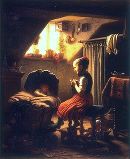
Leise wiegt dich deiner Mutter Hand;
Sanfte Ruhe, milde Labe
Bringt dir schwebend dieses Wiegenband.

Schlafe, schlafe in dem süßen Grabe,
Noch beschützt dich deiner Mutter Arm,
Alle Wünsche, alle Habe
Faßt sie lieben, alle liebwarm.

Schlafe, schlafe in der Flaumen Schoße,
Noch umtönt dich lauter Liebeston,
Eine Lilie, eine Rose,
Nach dem Schlafe werd’ sie dir zum Lohn.

Tr. Linda Godry

Do sleep, do sleep, lovely, sweet boy,

To the gentle rocking of your mother’s hand;

Peaceful sleep, and recreation

Does come floating with each gentle pull.

Do sleep, do sleep in your sweet berth,

Still protected by your mother’s arm,

All her wishes, all your talents

Encompassing, in her steady love.

Do sleep, do sleep, in that downy embrace,

Still you only hear a gentle crooning,

Dewy flowers: lilies and roses,

After slumber they will be your prize.

WYKwinos Report No. 11

Wino  Report # 11        ~ JK ‘67                       
Date: Thursday, Dec. 2, 2010. 7pm – 10 pm
         
We made it to our first anniversary!  Here is to your health: forget apples, current research shows that a glass or two of red wine a day will keep the doctor away. Unless of course, the doctor is drinking with you!

The theme of our anniversary tasting is a 2007 horizontal tasting of Portugal’s rapidly rising star wine region: DUORO. This tasting is a little study of similar grapes grown in the same region and in the same year.  It could be fun to appreciate how the wines end up with different flavours, and structure due to variations in altitude (micro-climate) of the terroir and technique of the wine makers.

I can ramble on and on, but to keep this report under controlled length and to deepen your understanding,  please spend a couple of minutes to read up on the article written by the multiple awards winning  English wine critique/judge Jamie Goode:

The new table wines coming from Portugal’s Douro Valley: part 1 …
(http://www.wineanorak.com/douro_overview1.htm)

Read the complete Winos Report here.

What Do You Really Want from Us?

中國人三讀,值得西方人三讀

一首在全球華人圈子引起哄動的英文詩。詩相傳是出於紐約州立大學水牛城分校榮譽退休物理學教授 Duo-Liang Lin 的手筆;這位學者表達的是整個中華民族的憤慨 … 以前國弱受欺凌,好不容易開始崛起又受敵視,中國人做甚麼都似乎不對,你們西方人究竟想我們怎樣生存? 這首詩近期在網上熱傳,原因是它反映了華人的心態,抒發了華人長期以來的集體壓抑。詩以英文撰寫,又在華盛頓郵報刊登,是受到雙重標準困擾的海外華人向西方偏見射出的一箭。 西方某些人對中國的敵意與偏見,原因複雜,有中國人自己的缺失,也有種族歧視、有色眼鏡、利益衝突、以至害怕中國崛起等因素。互聯網是中西交往的重要橋樑,在這種情勢之下,如何促進溝通?這首詩實在值得中國人三讀,值得西方人三讀。

The Poem…..

What Do You Really Want from Us?

When we were the Sick Man of Asia, we were called The Yellow Peril.
When we are billed to be the next Superpower, we are called The Threat.

When we closed our doors, you smuggled drugs to open markets.
When we embrace Free Trade, You blame us for taking away your jobs.

When we were falling apart, You marched in your troops and wanted your fair share.
When we tried to put the broken pieces back together again, Free Tibet you screamed, It Was an Invasion!

When tried Communism, you hated us for being Communist.
When we embrace Capitalism, you hate us for being Capitalist.

When we have a billion people, you said we were destroying the planet.
When we tried limiting our numbers, you said we abused human rights.

When we were poor, you thought we were dogs.
When we loan you cash, you blame us for your national debts.

When we build our industries, you call us Polluters.
When we sell you goods, you blame us for global warming.

When we buy oil, you call it exploitation and genocide.
When you go to war for oil, you call it liberation.

When we were lost in chaos and rampage, you demanded rules of law.
When we uphold law and order against violence, you call it violating human rights.

When we were silent, you said you wanted us to have free speech.
When we are silent no more, you say we are brainwashed-xenophobes.

“Why do you hate us so much﹖”we asked.
“No,” you answered, “we don’t hate you.”

We don’t hate you either, But, do you understand us?
“Of course we do, ”you said, “We have AFP, CNN and BBC’s ······”

What do you really want from us?

Think hard first, then answer ······ Because you only get so many chances.
Enough is Enough, Enough Hypocrisy for This One World.

We want One World, One Dream, and Peace on Earth.
This Big Blue Earth is Big Enough for all of Us.


給西方的詩
    〈你究竟要我們怎樣生存?〉

我們是東亞病夫時,我們被說是黃禍;
我們被預言是下一個超級大國了,我們被指是主要威脅。

那時我們閉關自守,你走私鴉片來強開門戶;
我們擁抱自由貿易了,你責罵我們搶走你的飯碗。

那時我們風雨飄搖,你鐵蹄犯境要求機會均等;
我們要整合破碎的山河,你說我們「入侵」······ 叫喊「給西藏自由」。

我們試行馬列救國,你痛恨我們成為共黨分子;
我們擁抱資本主義了,你又恨我們當了資本家。

當我們的人口到達十億,你說我們在摧毀地球;
我們要限制人口了,你說我們踐踏人權。

那時我們一貧如洗,你視我們賤如狗;
我們有鈔票借給你了,你怨我們令你國債纍纍。

我們發展工業了,你說我們是污染者;
我們有貨品賣給你了,你說我們是地球暖化的因由。

我們購買石油,你說我們搾取兼滅族;
你們為石油開戰,你說是為了解救生靈。

那時我們動亂無序,你說我們沒有法治;
現在我們要依法平暴,你說我們違反人權。

 
我們靜默無聲時,你說我們欠缺言論自由;
我們不再緘默了,你說我們是被洗了腦的仇外暴民。

為甚麼你這樣憎恨我們?我們想知道。
「不」,你說,「我不恨你們。」

 
我們也不恨你;只是,你了解我們嗎?
「當然了解」,你說。「我們消息多的是,有 AFP、CNN、還有BBC······」

 
其實你究竟要我們怎樣生存?

 
回答之前,請仔細的想一想 ······ 因為你的機會不是無限的。
已經夠多了 ······ 這個世界容不下更多的偽善了。

 
我們要的是同一個世界,同一個夢想,靖世太平。
這個寬廣、遼闊的藍地球, 容得下你們,容得下我們。

The Top Ten Ways to Plug a Leak

(Through Rose-Coloured Glasses)

1. Stick to the obvious. “No Comment” is still the most commonly used and reliable vocabulary of any politician.

2. Start each cable/email/correspondence with a Declaration: The following communication may contain hot, smelly, and explosive content. Viewers discretion is advised.

3. Another attempt with “wash your hands” tactics: start with this, “Don’t know if it is true or not, but here it is anyway”, OR “is there any merit in this? Please comment!”

4. Call the Plumbers, the White House Plumbers [a], that is.

5. Apply Leak Ender 2000, the miracle leak sealer [b] .

6. Follow Mayor Ford’s shining example. Stop the gravy (gluey) train (leak), declared “War on the Car” (Info Super Highway) is over. We are going underground.

7. Divert attention, start another war (Korean?)

8. Follow the advice of an ex-Harper advisor [c] .

9. Hello magazine, National Enquirer, Entertainment Tonight, 八卦雜誌 ………, ladies and gentlemen, here is our latest, the brand new Gossip Girls (and Guys) show, the politically correct WikiLeaks.

10. Wear a Pamper.

[a] The White House Plumbers, sometimes simply called the Plumbers, were a covert White House Special Investigations Unit established July 24, 1971 during the presidency of Richard Nixon. Its task was to stop the leaking of classified information to the news media. Its members branched into illegal activities working for the Committee to Re-elect the President, including the Watergate break-ins and the ensuing Watergate scandal.

[b] The miracle sealer that stops virtually any leak immediately! Great for gutters, pipes, walls, pools, flashing, roofs and more! (a TV commercial)

[c] Mr. Flanagan, an ex-Harper advisor, now a Calgary University professor, made his comments on CBC’s Power and Politics show Tuesday evening. In a discussion about the significance of the leaks, Mr. Flanagan said: “I think Assange (of WikiLeaks), should be assassinated, actually. I think Obama should put out a contract or maybe use a drone or something.”

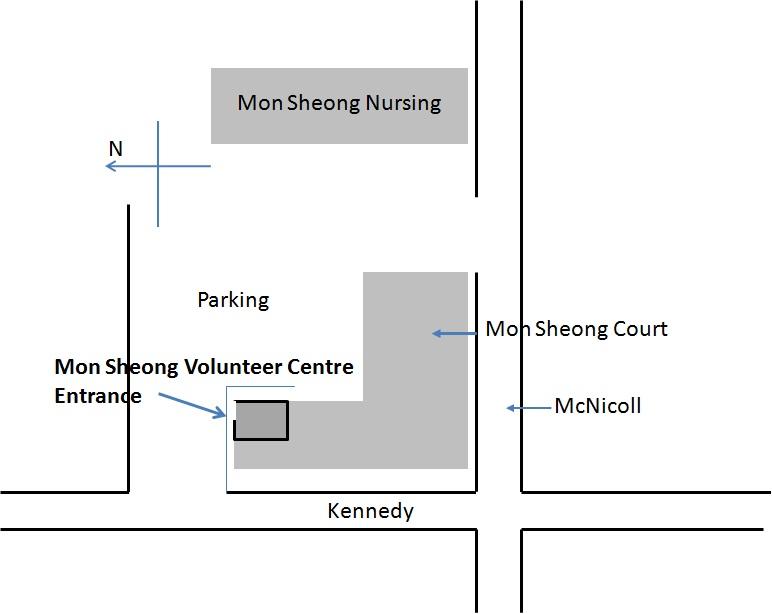
孟嘗會招募義工

孟嘗長期護理中心現正招募大量義工, 主要協助餵食, 活動,及文書工作.有興趣人士,請聯絡孟嘗會義工服務部, 電話: 416-291-3898內線3130 簡小姐.
為增進閣下對孟嘗會各項設施及服務之了解, 請蒞臨孟嘗義工中心參觀
地址: 2020 McNicoll Avenue
開放時間:星期一至星期六,早上十時到下午四時

從手帕談起

(Through Rose-Coloured Glasses)

翻箱倒篋找東西。在抽屜底, 卻見到幾條舊手帕。在手帕的一角, 還綉有我英文姓名的第一個字母。那些手帕, 該有三十多年的歷史了。

曾記否, 那羅蔓蒂克的故事, 淑女看上了紳士, 但又不好意思茂然對話, 惟有拋下手帕, 紳士連忙拾起, 物歸原主, 因而交談起来, 引出了一個電影的愛情故事。

這是手帕的妙用。

年青時, 出入都會帶有手帕, 這是清潔的行為。天氣炎熱, 汗流夾背, 就要取出手帕抹汗。傷心慾絕, 痛哭流涕, 又會拿出手帕。傷風鼻塞, 更會出動手帕, 矯鼻涕。

曾幾何時, 衛生專家認為, 手帕是傳染疾病的媒介。每當病人傷風流涕, 用手帕來矯鼻涕, 用完又放回衭袋或手袋, 結果就容易傳播病菌。

手帕漸被途汰, 取而代之, 就是紙巾。

當然淑女不能再利用紙巾来作媒, 但紙巾卻清潔衛生, 使用方便。每次用畢, 就立即棄丢, 不會再傳播病菌, 大大提高了市民的健康。

現在每到傷風季節, 只見人手一包紙巾, 呼嚕地, 一張一張地”包雲呑”, 然後順手一擲, 又一張。

甚至在進食時, 孩子們嘴角弄污了一點, 就立即用紙巾一抹, 擲去, 再咬幾口, 又是一張新紙巾。結果飯後, 滿枱都是紙巾, 又覺浪費。

不得矣, 妻子下令, 推行家庭環保運動, 實行紙巾配給, 規定每張紙巾, 都要撕半, 分次使用。

這也能把銷耗量免強減低

雨__(江紹倫)

無雨風暴

           香港扯起三號風球,氣象廣播員十分緊張地說,威脅着香港及鄰區的熱帶旋風〝鮎魚〞十分强烈,隨時可能造成各種破壞,促大家做好防範工作。 

            廣播連續了三天,連同鮎魚在廣東沿岸和台灣各地造成的嚴重災難。但是,奇蹟出現,它不以香港為對象,只悄悄地離開,連雨點也沒有給我們留下。 

            多數香港人對雨沒有喜愛的感情,部分因為它與生活沒有甚麽重要的關係,部分因為它帶來打傘的麻煩。即使如此,還是有人喜歡雨的,如樂於玩水的小孩,或者愛在雨中談情的青年人。 

雨育生命

            對於生活在大自然中的農民來說,雨卻是孕育生命的要素,是生活所必要的天賜寶物。而大自然愛好者及詩人,則視雨為美的代表。古今中外,不知有多少人詠唱過雨的種種動力和形態。 

            十九世紀初,美國的愛默生提出〝先驗主義〞,主張一種返璞歸真及善待大自然的生活。他的追隨者梭羅在《華爾亭森林》中寫下這樣的經驗: 

            〝我不曾感覺到寂寞,沒有受到被孤獨包圍的經驗,但是,有一次,我在樹林中住了三個星期,那種靜寂乏味的生活叫我內心煩悶,很渴望與鄰人往來,或者儘快離開無人的森林。不知從何時開始,屋外細雨紛紛。我聽着大自然在屋子周圍發出的聲音,感到親近,一種充滿慈愛的交流,一種恆定親切的安慰。這樣,樹林中一切原來生疏的景物都驟然變為友善和親切,就像朋友一樣〞。

閱讀全文

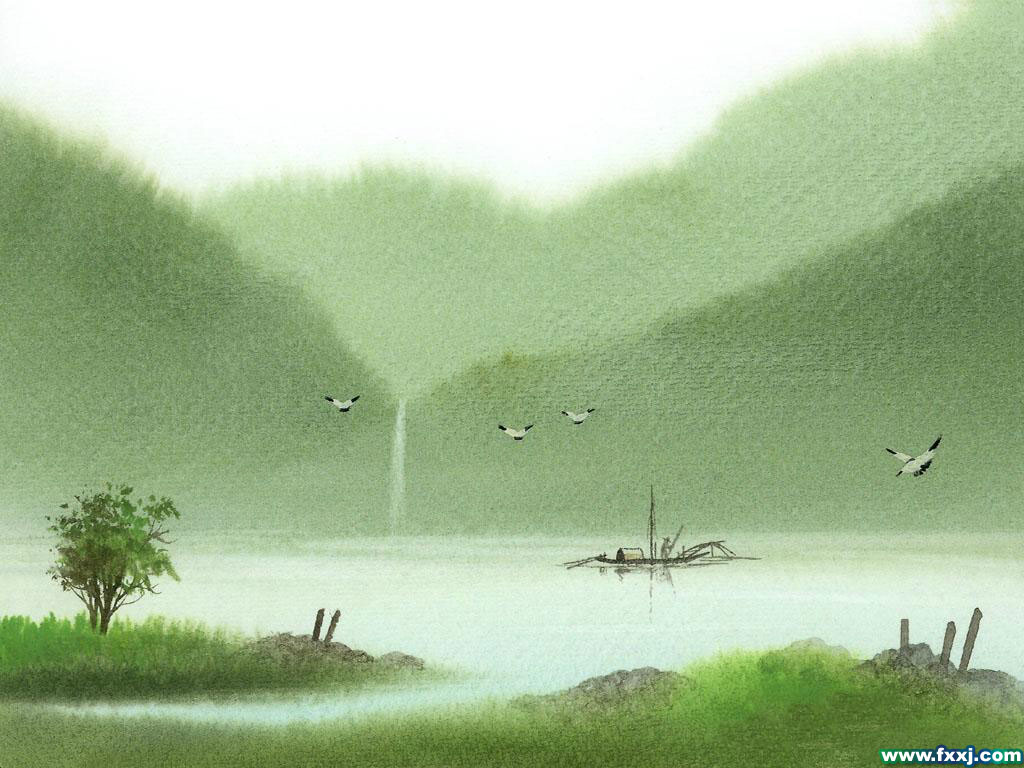
《虞美人》 听雨 (南宋) 蒋捷

少年听雨歌楼上,红烛昏罗帐。壮年听雨客舟中,江阔云低,断雁叫西风。

而今听雨僧庐下,鬓已星星也。悲欢离合总无情,一任阶前,点滴到天明。


 Tune: Lady Yu the Beauty                  Jiang Jie (13th Century)

 Listening to the rain          

[Tr. YK Chan  陈耀国译] 

When young listening to the rain as songs were sung on the floor above,

From crimson candles smoke lingered onto the canopied bed of love.

When I travelled middle-aged, listening to the rain on a passenger boat,

Above a river wide clouds hung low,

A lost goose cried as the chilly west wind blowed.


Now listening to the rain at the monk’s lodge,

My hair has speckled and scattered without dodge,

Sadness and happiness, separation and reunion impassion me no more.

The rain pours on the terrace galore,

then drizzles until dawn.

————————-

Note:   Joseph Needham (1900-95), “The Man Who Loved China” (a biography by Simon Winchester http://www.youtube.com/watch?v=b1j2zs4Xwqk), translated this poem with the help of his friends thus:

As a young man, listening to the girls in a tower
   I heard the sound of the rain,
While the red candle burned dim in the damp air.
In middle age, travelling by boat on a river,
      I listened to the rain falling, falling;
   The river was wide and clouds drifted above;
I heard the solitary cry of a teal borne on the west wind.
    And now in a cloister cell I hear the rain again,
      My hair is grey and sparse;
Sadness and Happiness, separation and reunion, all seem one,
     They move me no more.
Let the rain drop all night on the deserted pavement
    Till the day dawns.

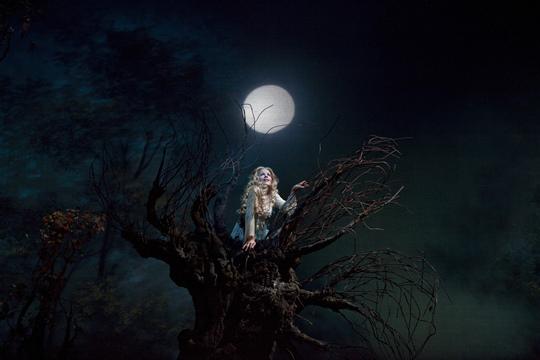
“Pisen Rusalky O Mesicku” (Song to the Moon) Jaroslav Kvapil (1868–1950)

Renée Fleming as Rusalka in NY Met production

捷克歌剧<露莎尓卡>之女高音咏叹調<唱给月亮>

Soprano aria from Rusalka, a Czech opera by Antonín Dvořák. The Czech libretto was written by
the poet Jaroslav Kvapil based on the fairy tales of Karel Jaromír Erben and Božena Němcová.  
A Rusalka (soprano) is a water sprite of Slavic mythology, usually inhabiting a lake or river. 
The story is similar to that of Hans Christian Andersen’s Little Mermaid.
Aria setup: In Act I, Rusalka (soprano) sings her Song to the Moon, asking it to tell the
Prince of her love.
[Source: http://en.wikipedia.org/wiki/Rusalka_(opera)]
Renditions by:
Lucia Popp - http://www.youtube.com/watch?v=uoPTh_q7GYs&feature=related;
http://www.youtube.com/watch?v=yvenKSl2AG8
Renée Fleming - http://www.youtube.com/watch?v=1tImMZLfHaE&feature=related
Frederica von Stade (mezzo-soprano) - http://www.youtube.com/watch?v=cPikNbAO994&feature=related
Translation by Jules Brunelle
Mesicku na nebi hlubokem                     O moon high up in the deep, deep sky,
Svetlo tvé daleko vidi,                      Your light sees far away regions,
Po svete bloudis sirokém,                   You travel round the wide,
Divas se v pribytky lidi.                    Wide world peering into human dwellings
Mesicku, postuj chvili                       O, moon, stand still for a moment,
reckni mi, kde je muj mily                   Tell me, ah, tell me where is my lover!
Rekni mu, stribmy mesicku,                   Tell him, please, silvery moon in the sky,
me ze jej objima rame,                       That I am hugging him firmly,
aby si alespon chvilicku                     That he should for at least a while
vzpomenul ve sneni na mne.                   Remember his dreams!
Zasvet mu do daleka,                         Light up his far away place,
rekni mu, rekni m kdo tu nan ceka!           Tell him, ah, tell him who is here waiting!
O mneli duse lidska sni,                     If he is dreaming about me,
at'se tou vzpominkou  vzbudi!                May this remembrance waken him!
Mesicku, nezhasni, nezhasni!                 O, moon, don't disappear, disappear!