“Vesti la giubba” [穿上你的戏服] Ruggero Leoncavallo (1857-1919; It.)

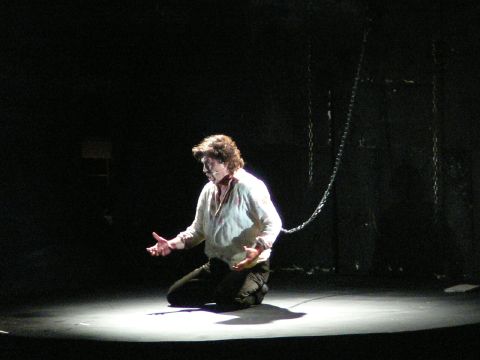
Vesti la giubba (Put on the costume) is a famous, moving and passionate tenor aria of the opera I Pagliacci (The Clowns), written and composed by Ruggero Leoncavallo.

Aria introduction: The actor, Canio, discovers his wife’s (Nedda’s) infidelity, but still must prepare for his performance as Pagliaccio the clown because ‘the show must go on’.

Historical recordings by Enrico Caruso:  http://www.youtube.com/watch?v=RL7wdUPXpiM

An outstanding performance of the scene by Franco Corelli in 1954:

http://www.youtube.com/watch?v=EIVbZtwRqIM&feature=related

Tr. YK Chan 陈耀国译

Recitar! Mentre preso dal delirio, 演戏吧! 在迷妄中,
non so più quel che dico, 我已不晓得自己说什么
,
e quel che faccio! 做什么!

Eppur è d’uopo, sforzati!
但是, 我仍然要尽力而为!
Bah! Sei tu forse un uom? ! 你还不是个男子汉吗
?
Tu se’ Pagliaccio! 你是个小丑!


Vesti la giubba, 穿上你的戏服,
e la faccia infarina. 涂上你的脸粉.

La gente paga, e rider vuole qua.
人们付了钱, 都想在此笑一顿.
E se Arlecchin t’invola Colombina, 若果那丑角偷去你的爱人
,
ridi, Pagliaccio, e ognun applaudirà! 笑吧, 小丑, 观众便会喝彩
!
Tramuta in lazzi lo spasmo ed il pianto 把你的悲叹和眼泪变作玩笑,

in una smorfia il singhiozzo e ‘l dolor, Ah! 哀痛和饮泣变作笑脸, !

Ridi, Pagliaccio, 笑吧, ,
sul tuo amore infranto!
笑你破碎了的爱!
Ridi del duol, che t’avvelena il cor! 笑毒害了你心脏的哀伤!

“L’Autunno” Antonio Vivaldi (1678 – 1741)

(意) 安东尼奧.菲凡尔迪

Click this photo to see the shimmering reflection

For introduction, see “La Primavera” Antonio Vivaldi (1678-1741)

Shlomo Mintz (violin solo) performing Vivaldi’s Four Seasons: L’Autunno

Autumn I Allegro: http://www.youtube.com/watch?v=iEheBo1s7DE; II Adagio molto: http://www.youtube.com/watch?v=yUut2YZtm7E;

III Allegro: http://www.youtube.com/watch?v=f285bKjQ_Qo

Tr. YK Chan 陈耀国译

Allegro
Celebra il Vilanel con balli e Canti
Del felice raccolto il bel piacere
E del liquor de Bacco accesi tanti
Finiscono col Sonno il lor godere

快板

农夫高歌起舞庆祝

丰收的欢乐.

很多人借助酒神

以恬睡来完结他们的狂欢.

Adagio molto
Fà ch’ ogn’ uno tralasci e balli e canti
L’ aria che temperata dà piacere,
E la Staggion ch’ invita tanti e tanti
D’ un dolcissimo Sonno al bel godere.

非常慢板

人人都歌舞忘忧

沉醉在欢乐的气纷中.

秋季也唤请了许多人

从甜睡中醒来欢乐.

Allegro
I cacciator alla nov’ alba à caccia
Con corni, Schioppi, e canni escono fuore
Fugge la belua, e Seguono la traccia;
Già Sbigottita, e lassa al gran rumore
De’ Schioppi e canni, ferita minaccia
Languida di fuggir, mà oppressa muore.

快板

猎人都在黎明出动,

带着号角和猎枪,领着猎犬狩猎.

野兽逃跑, 他们追踪;

在恐惧和恹惓下及震耳的枪声狗吠声中,

猎兽受了伤, 在胁迫下软弱逃生.
但终于在困扰中死亡.

送友人 (唐) 李白

 
送友人                                   Farewell to A Friend                             
李白                                        Li Bai (701-762)
                                                tr. YK Chan 陳耀國譯

青山横北郭,白水绕东城。 Green hills traverse the northern outskirts; glistening water meanders to city east.   
此地一为别,孤蓬万里征At this departure point, you as a lone sail navigate ten thousand li at least.
浮云游子意,落日故人情。 A wanderer drifts like clouds, till sunset he recalls old friends and deeds.
挥手自兹去,萧萧班马鸣。 Waving good-bye to you from here, neighing too are our riding steeds.

E lucevan le stelle–tenor aria from Puccini’s “Tosca”

E lucevan le stelle is the romanza of Mario Cavaradossi in act III of Tosca, the opera composed by Giacomo Puccini to an Italian libretto by Luigi Illica and Giuseppe Giacosa. It is sung by Tosca’s lover, the painter Mario Cavaradossi (tenor), while awaiting his imminent execution by firing squad.

Video sampler: Salvatore Licitra (tenor) http://www.youtube.com/watch?v=4qgIG3jw-rw

Tr. YK Chan 陈耀国译

Cavaradossi imprisoned

E lucevan le stelle, 星光在这儿闪亮过,

ed olezzava la terra 那里又有土香的气息.

stridea l’uscio dell’orto 果园的闸门在响动,

ed un passo sfiorava la rena. 脚步轻轻的印在沙地上.

Entrava ella fragrante, 她随着芬芳的香味进,

mi cadea tra le braccia 投入我的怀抱.

O dolci baci, o languide carezze, ! 甜蜜的吻! ! 延绵的拥抱!

mentr’io fremente 我战战兢兢,

le belle forme disciogliea dai veli! 慢慢地开启她绝丽的美貌!

Svanì per sempre il sogno mio d’amore. 现在, 我梦中的爱人已永远消失了.

L’ora è fuggita, e muoio disperato! 我的时辰已到, 就是我绝望的死亡时刻.

E non ho amato mai tanto la vita! 同时, 我从来没有如此热爱过生命!

“Musetta’s Waltz” Lyrics Luigi Illica (1857-1919) & Giuseppe Giacosa (1847-1906)

Soprano aria Quando me’n vo’ from Puccini’s opera “La bohème

“慕瑟太之圆舞曲”      (意) 伊力卡 与 芝亚高沙 譜詞

普茨尼歌剧”波希米亚人”女高音咏叹調

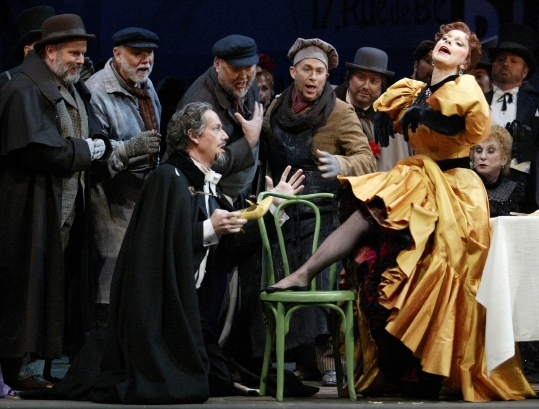
Intro: With this seductive and risqué song, Musetta teases her old flame, Marcello, at Café Momus in the Latin Quarter of Paris (Act II, ending).  The naughty rendition by Renata Scotto in the NY Met (1984) production (last link below) is one of the most vividly directed performances.

Anna Moffo: http://www.youtube.com/watch?v=S99I6S4PHj4&feature=related

"La Boheme" poster

Anna Netrebko: http://www.youtube.com/watch?v=uZzC6e6olCY&feature=related

Maki Mori: http://www.youtube.com/watch?v=sdnHvxmo2N0&NR=1 (including “The

   Doll Song” from Tales of Hoffmann.

Renata Scotto: http://www.youtube.com/watch?v=QYZzAlxmG5k

Tr. YK Chan 陈耀国译

Quando men vo,  当我上街,
Quando m
en vo soletta per la via,  当我上街独行,
La gente sosta e mira.
  人們都停下盯着我。
E la bellezza mia tutta ricerca in me,  都探索我的美貌,
Ricerca in me da capo a pie.
  从头到脚窥察我。

Ed assaporo allor la bramosia sottil,  我又覺到一鼓思慕,
Che da gl’occhi traspira.
  在他们的眼睛亮相。


E dai palesi vezzi intender sa  那种魅力的感受

Musetta's teasing and flirting song

Alle occulte belta.  是由隐蔽美貌所引发的。
Cosi l’effluvio del desio  这般慾望
Tutta ma’ggira.  全部圍绕在我身旁。
Felice mi fa!
  使我暢快!
Felice mi fa!  使我暢快!

E tu che sai,  你又知道

Che memori e ti struggi,  記憶过往与渴望將来,
Da me tanto rifuggi?
  却总是避开我?
So ben:  我深知:
le angoscie tue non le vuoi dir,
  你不愿現出你的憔悴,
Non le vuoi dir,  你不愿表达情绪,
So ben ma ti senti morir!
  我却曉得你惨如痴逝!

“M’appari, tutt’amor”

You may have listened to “M’appri, tutt’amor” (“You appear to me, full of love”) as a popular Italian opera aria with a beautiful melody, such as that sung by Jussi Bjorling in his tender way: http://www.youtube.com/watch?v=pFnHkOX_bbQ&feature=related;

and Placido Domingo’s expressive yearning: http://www.youtube.com/watch?v=KU6F3_XMU_w&feature=related]

陈耀国译 Tr. YK Chan
The market at Richmond


M'appari.....tutt'amor,
你出現……….滿載愛情,
il mio sguardo.....l'incontro:
一瞥之下……..我們相会:
bella si.....che il mio cor,
多麼漂亮………..使我的心,
ansioso a lei volo:
要飛躍去靠近你:
mi feri, m'invaghi
我受創,燃心焰
quell'angelica belta,
天使般的艳丽,
sculta in cor dall'amor 
把愛情刻進我的心
cancellarsi non potra:
不能擦掉它
il pensier di poter
单是想着她
palpitar con lei d'amor,
就呼应我熱情的心跳,
puo sopir il martir
缓和我的遭难
che m'affana e stranzia il cor e stranzia il cor

却令我憂傷,令我心碎,令我心碎!

M'appari.....tutt'amor,
你出現……….滿載愛情,
il mio sguardo.....l'incontro:
一瞥之下……..我們相会:
bella si.....che il mio cor,
多麼漂亮………..使我的心,
ansioso a lei volo:
要飛躍去靠近你:

Marta, Marta, tu sparisti

瑪太,瑪太,你消失了,

e il mio cor col tuo n’ando!

我的心也跟你離去!

Tu la pace  mi rapisti,

你偷掉了我心安,

di dolor io moriro.

我將憂伤而逝,

di dolor morro,  ah, morro!

我就死去,阿,我將消逝!

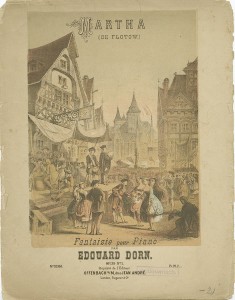
This tenor aria actually is from a German opera “Martha 玛太” [See http://en.wikipedia.org/wiki/Martha_(opera)] by Friedrich von Flotow (1812-1883) with German libretto.  The original German aria is “Ach, so fromm, ach so traut” (“Oh so sweet! Oh so true!”  The romantic comic opera is based on a Scottish story of idealized love that crosses the class boundary between royalty and peasantry.

The German tenor , Fritz Wunderlich, sings it perfectly

[http://www.youtube.com/watch?v=LGuWTAzUfF0&feature=related]

Placido Domingo, who is very versatile, also sings the original version:

http://www.youtube.com/watch?v=KAW-R0K1U5Y&feature=related

Compare the Italian lyrics to the original German below.  The English translation that follows is not mine.—YK

Ach! so fromm, ach so traut,
Hat mein Auge sie erschaut;
Ach! so mild, und so rein
Drang ihr Bild in’s Herz mir ein.
Banger Gram, eh’ sie kam,
Hat die Zukunft mir umhüllt,
Doch mit ihr blühte mir
Neues Dasein lusterfüllt.
Weh! Es schwand, was ich fand, ach!
Mein Glück erschaut ich kaum,
Bin erwacht und die Nacht
Raubte mir den süssen traum.
Ach! so fromm, ach so traut,
Hat mein Auge sie erschaut;
Ach! so mild, und so rein
Drang ihr Bild in’s Herz mir ein.
Martha! Martha!
Du entschwandest, und mein Glück
Nahmst Du mit Dir;
Gib mir wieder, was Du fandest,
Oder teile es mit mir.

Oh so sweet! Oh so true!
This is how my eyes saw you;
Oh so kind and so pure!
Of this my heart was very sure.
Before you came was only sorrow.
Worried gloom was my tomorrow.
Then with you life blossomed new,
Only joy with you I knew.
Alas! Alas! you did not stay,
My happiness it went away.
Sleepless nights do I endure,
My sweetest dream has gone for sure.

Oh so sweet! Oh so true!
This is how my eyes saw you;
Oh so kind and so pure!
Of this my heart was very sure.
Martha! Martha!
You went from me
And took my happiness with thee;
Bring back to me what once you brought,
Or send me just some word or thought.

« Plaisir d’amour » Jean de Florian (1755-1794)

A song from Célestine by Jean Paul Égide Martini (1741-1816)

爱情之乐” ( ) .狄佛罗里阑   

马丁尼"西拉丝汀"剧插曲

Tr. YK Chan 陈耀国译

Comments: This classical French love song (Joy of Love) was originally intended for the male voice singing about his lost love (of a woman named Sylvie).  However, there are many interpretations by female singers as shown in the links below.  I find that of Victoria de Los Angeles the most outstanding in portraying a languishing lover.  I am also surprised and impressed by the Chinese-Canadian countertenor, D. Kai Ma, in comparison with Elizabeth Schwarzkopf and Janet Baker.  The contralto voice of Marian Anderson gives a dark and heavy version.

Of the popular simplified English versions of this song, Joan Baez offers a sweet and meditative folksy soprano voice, which is self-accompanied on the guitar, singing the first and last stanza in French (http://www.youtube.com/watch?v=eA63-slwZCs).  Elvis Presley sang the melody in the pop song “Can’t help falling in love”. 

Note that the reference to flowing water in the lyrics parallels that in Jia BaoYu’s singing of “Song of the Red Bean” in Dream of  Red Mansions.

Of the tenor voice, I prefer Fritz Wunderlich’s expression of lost love. 

Performed by Fritz Wunderlich (tenor): http://www.youtube.com/watch?v=7kICm5Lb04c&feature=related

By Jose’ Van Dam (baritone): http://www.youtube.com/watch?v=N9-N1JKWmtM&feature=related

By Tito Schipa (tenor): http://www.youtube.com/watch?v=88qCOensANw&feature=related

By Victoria de Los Angeles (soprano): http://www.youtube.com/watch?v=HU2yiR5DTyk&feature=related

or http://www.youtube.com/watch?v=5CBbi3o8k7I

By D. Kai Ma (馬稚凱) (counter-tenor): http://www.youtube.com/watch?v=CjA9wszGM0I or

http://www.youtube.com/watch?v=xBh0q3OhYEM&feature=related

By Elizabeth Schwarzkopf (soprano): http://www.youtube.com/watch?v=IjBNp07_qok&feature=related

By Janet Baker (mezzo): http://www.youtube.com/watch?v=aWNiKOBu3jE&feature=related

By Marian Anderson (contralto): http://www.youtube.com/watch?v=L856hexNxUU&feature=related


Plaisir d’amour

爱情之乐 

ne dure qu’un moment,

不过一阵子,

Chagrin d’amour dure toute la vie.

爱情之惆怅却一世长

J’ai tout quitté pour l’ingrate Sylvie.

我与忘恩的西尔维分手

 
Elle me quitte et prend un autre amant.

她与我分手却另寻新欢

Plaisir d’amour ne dure qu’un moment,

爱情之乐不过一阵子,

 
Chagrin d’amour dure toute la vie.

爱情之惆怅却一世长


Tant que cette eau coulera doucement

此水尚静静的长流

 
Vers ce ruisseau qui borde la prairie,

向那草原边的溪涧,

 
Je t’aimerai, me répétait Sylvie,

我愿向西尓维重复申诉我爱你,

 
L’eau coule encore, elle a changé pourtant.

此水仍在长流,她却已变心


Plaisir d’amour

爱情之乐 


ne dure qu’un moment,

不过一阵子,


Chagrin d’amour dure toute la vie.

爱情之惆怅却一世长 

“Choeur des Soldats ” Jules Barbier (1825-1901) et Michel Carré (1821-72)

Chorus from Gounod’s opera “Faust”

“士兵合唱曲”     (法) 巴比尔 与 卡雷 谱词

古诺歌剧 « 浮士德 » 合唱曲

Best Version with Lyrics   http://www.youtube.com/watch?v=ck-Ph-Zb2MI

Performed by Chœurs des Opéras de Région, Chorégies d’Orange, théâtre antique – 5 août 2008 

http://www.youtube.com/watch?v=36Kg7esN93E


Gloire immortelle
De nos aïeux,
Sois-nous fidèle,
Mourons comme eux!
Et sous ton aille,
Soldats vainqueurs,
Dirige nos pas, enflamme nos cœurs!
 
Pour toi, mère patrie,
Affrontant le sort
Tes fils, l’âme aguerrie,
Ont bravé la mort!
Ta voix sainte nous crie:
En avants, soldats!
Le fer à la main, courrez aux combats! 
 
Gloire immortelle
De nos aïeux,
Sois-nous fidèle,
Mourons comme eux!
Et sous ton aille,
Soldats vainqueurs,
Dirige nos pas, enflamme nos cœurs!

 
Vers nos foyers hâtons le pas!
On nous attend; la paix est faite!
Plus de soupirs! ne tardons pas!
Notre pays nous tend les bras!
L’amour nous rit, l’amour nous fête!
 
Et plus d’un cœur frémit tous bas
Au souvenir de nos combats!

 
Gloire immortelle
De nos aïeux,
Sois-nous fidèle,
Mourons comme eux!
Et sous ton aille,
Soldats vainqueurs,
Dirige nos pas, enflamme nos cœurs!


Tr. YK Chan 陈耀国译  for Bastille Day (14 July, RF) and Army Day 建軍節 (1 August, PRC)


我們效忠 

先祖 

不朽的荣耀 

我們若能和他们一样阵亡
在你翼下
胜利的士兵 

帶领我们的步伐激发我们的雄心 


献给,亲愛的祖国,
面臨现境
你的兒女,堅强的志魂,
都願誓死
我们吶喊祢神圣的呼声
士兵們,前进!
手拿刀枪衝鋒战斗吧 


我們效忠 

先祖 

不朽的荣耀 

我們若能和他们一样阵亡
在你翼下
胜利的士兵 

帶领我们的步伐激发我们的雄心


环繞我們的家园,加緊步伐! 

他们等候我们,获取和平! 

一再叹息!但我們不会延迨! 

祖国祈待着我們! 

爱向我們欢笑,我們喜爱欢庆! 

多少懇诚的心灵 

怀念着我们的战役!


我們效忠 

先祖 

不朽的荣耀 

我們若能和他们一样阵亡
在你翼下
胜利的士兵 

帶领我们的步伐激发我们的雄心

“Ich bin der Welt abhanden gekommen”* Gustav Mahler (1860 – 1911)

“Lorraine Hunt Lieberson sings Mahler (July 7 1860 – May 18 1911)

[http://www.youtube.com/watch?v=BiME0gbhafk&feature=player_embedded]

This Wednesday is the 150th anniversary of the birth of the great Gustav Mahler, who was born in Kaliste, Bohemia on July 7, 1860. His late-Romantic musical idiom was a link between the Romantic Era and the modernism to come later. His music was under-appreciated during his lifetime, but it underwent a revival starting mid 20th century. Today his symphonies and his songs are considered a cornerstone of the standard repertoire. To remember this important anniversary, orchestras around the world are programming Mahler, and special celebrations are taking place this week in Austria and Hungary. Our own TSO is unfortunately in hiatus, but the Toronto Summer Music Festival is calling this year’s theme Song of the Earth, and will perform the chamber version of Das Lied von der Erde (2) on August 7.  To celebrate Mahler’s birthday, I’ve chosen the fifth song of his transcendent Ruckert Lieder, “Ich bin der Welt abhanden gekommen” (1), sung by the late, great mezzo Lorraine Hunt Lieberson. She tragically died at the much too young age of 52 from breast cancer on July 3, 2006. To many, “Ich bin der Welt” is the most inspired and deeply moving of all Mahler songs. Heard here in a live performance by Hunt-Lieberson accompanied by Roger Vignoles, it takes on an almost unbearable poignancy.”

– Joseph K. So  [http://videoblog.scena.org/]
______________________________
Footnotes by YK:

*(1) “I have lost track of the world”, set to song by Mahler.  For an English translation of the German lyrics, see

http://www.recmusic.org/lieder/get_text.html?TextId=14001

(2) Four of Li Bai’s poems were used by Mahler in this work.

“Old Folks At Home” Stephen Foster (1826-64)

Rosa Ponselle Sings Stephen Foster’s Old Folks At Home (or Swanee River):

http://www.youtube.com/watch?v=rgpJM17KVZw&feature=player_embedded

“This Sunday, July 4, is Stephen Foster’s birthday. He was born on July 4, 1826 in Lawrenceville, Pennsylvania, and died in poverty at only 37 in New York on January 13, 1864. Considered the Father of American Song, Foster had a melodic inspiration second to none. One has to have a heart of stone not to be moved by his songs the likes of Beautiful Dreamer, My Old Kentucky Home, Old Folks At Home, and many more.  To remember the birthday of this great song writer, I have chosen Old Folks At Home, sung by another great American, soprano Rosa Ponselle.  Opera lovers will be familiar with Ponselle, who sang in the era of Caruso.  It is so intriguing to hear a great Norma, Aida, Santuzza, and Leonora (Forza) sing this very sentimental ditty. Ponselle actually sings it without excessive sentimentality, only varying her tone colours for expression.  This is a performance to remember.”
– Joseph K. So           http://videoblog.scena.org/