|
23:46
Half an hour ago, I moved my flight out to Singapore ahead by a day… leaving tomorrow. The train to the airport is in operation …. confirmed in person at the station tonight.
The hotel is very quiet. The person at the front desk told me all the guests had checked out. This person is a French who has been in Tokyo for three years and speaks fluent Japanese (with no accent!) said he isn’t scared….not even the nuclear plant meltdown if and when it happens. He is very confident of the Japanese’ ability to contain and control it. He has no intention of going back to France as he now calls Japan his home.
Life on the street is as usual….in Ikebukuro, in Shinjuku, in Tokyo, in Ginza….my round of tours today and my walk of the day.
|
Author Archives: acyho
Rose Ho Reporting from Japan_(2011.03.12)-back to Tokyo
The D train and more….
It’s the ‘D’ train…the wrong train….wrong in the sense that it is the local train for the locals with 3 train switchings along the way. But after 3 hours (not 90+ minutes), I am back in Tokyo.
Things along the way seem calm and peaceful. Life is normal in Tokyo…as if no disasters have happened. People dine out.
I walked 2 subway stations after getting off the train, not because I fear the quake and the service, but I simply need the exercise.
I enjoyed a sumptuous Chinese dinner on the way back to the hotel.
I was told that the Narita Airport is closed. No flights out yesterday and today. Some hotel guests scheduled to fly out today were rescheduled to March 15, Tuesday. So, I had better email (no point to call…phone lines not working) Singapore Airline to confirm my flight on March 15. My next stop is Singapore, not HK.
Hotels stop all elevator service (power supply unstable). Guests are told to leave building immediately when it shakes. Notices are distributed to warn guests of power outage in certain hours tomorrow. Reminder to use the flash light and keep it in its place. I was advised not to go to Kamakura as it is closer to the coast and in the way where the tsunami is moving. Subway is a better way to go than the JR trains above ground. But I will exercise my legs to extent possible.
I subscribed to the train service alerts provided by Google to keep me apprised in English on what’s happening. I failed to understand the Japanese on the web sites.
It’s another day!
Rose Ho Reporting from Nikko_(2011.03.12)- Chuckking out
Disaster-ready
Japan is pretty disaster-ready.
- In our hotel room in Tokyo, tiny as it is, there is a flash light. Now that disaster has hit, I carry my own torch in my shoulder sidebag instead of in the knapsack to facilitate easy retrieval. A lot of places are out of electricity when disaster hits.
- The EXIT sign in my family guesthouse is large and bright. The green leon signboard is 2 feet by 1 foot. Even in the dark, there is no way to miss it. There is one upstairs and downstairs in my host’s house. My host showed me the way to the outside thru these exits.
- There are places around town designated as emergency or disaster shelters. I spotted a number of these in Tokyo including the Ueno Park.
- When the LAN lines and cellphone network are jam-packed, there are special numbers one can call to deposit and to retrieve messages. In this way, family members and people can continue to communicate with each other to convey their own situation. Now with Internet, there should b e more of these facilities.
- Everyone who carries a cellphone (at least here in Nikko) will be sent messages of upcoming disaster warnings. In this way, one can tell if a strong quake is hitting or not.
- Police are out at work to keep order and guide people to shelters. At the Nikko train station, some volunteers who speak English were present yesterday to communicate with those who do not understand Japanese.
- Relief forces are out at work immediately. According to my host, railway companies work overnight to inspect train lines right after quakes to ensure services can resume as soon as possible. This is on top of the government emergency service units out at work.
- People are accounted for as soon as possible and statistics are tallied.
- The Prime Minister calls meetings and issues instructions (can’t understand Japanese but guessing from the TV screen) at the earliest possible time.
- Their houses are built to withstand quakes (from TV shows I watched before). My host also told me the highrises in Tokyo can withstand strong quakes.
Are there more? Could be. But so far, these are my observations and experience.
Someone asked me if there is something Chinese can learn from Japan. This emergency and crisis management is one.
I hope “our fellow countrymen” who visit Japan won’t steal the torches from the hotel rooms …… or in their own hometown when the latter’s hotels are so equipped!
(The shake goes on….happening as I press SEND!!!)
(More from Tokyo…hopefully…..or from the wi-fi coffee shops near the train station!)
Rose Ho Reporting from Nikko_(2011.03.12) – It’s another day
Rose Ho Reporting from Nikko_(2011.03.11) – alone but safe
Rose Ho Reporting from Japan – Stuck in Nikko (2011.03.11)
高山仰止 — 長嘯倚孤劍 目極心悠悠__江紹倫
高山仰止 — 俯仰終宇宙,不樂復何如__江紹倫
2. 俯仰終宇宙,不樂復何如 (陶淵明詩句)
求知與崇高
在心理學架構中,恐懼和好奇都是崇高的來源。人恐怕未知或神秘的東西,因為不知而感到不安。但是,人又好奇,明知為了求知不知的,或者揭開神秘,都有風險,都必須深入其境,面對新象。所以恐懼和好奇互相對立,只有〝知〞可以解決一切。
有人說,崇高生自人與大自然的鬥爭。人是通過把握自然來宣告自己獨立自主的。但是,人不僅僅滿足於把握自然,他更要挑戰自然的神秘。完成了,他才安然自得,自我完成。
人類從開始便關心自己。就在這種關懷之中,人們發現,原來要給人生加上意義是不可能的,因為這些意義並不存在。這一發現令人非常苦惱。從古到今,人們都極力要解除這種苦。現代西方的存在主義給這種意願和努力冠上〝荒誕〞的名字。在中國,老莊早就用〝虛靜〞之心來解決這一問題了。
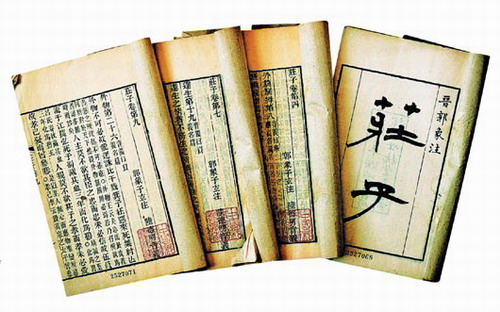
莊子在《天運》裡問:宇宙有主宰者嗎?萬物有目的嗎?人可有知嗎?〝天其運乎?地其處乎?日月其爭於所乎?孰主張是?孰綱維是?……雲者為雨乎?雨者為雲乎?〞
莊子又在《至樂》問:人生有絕對的快樂嗎?能够長久留存嗎?到哪裡可以尋着?〝天下有至樂無有哉?有可以活身者無有哉?今奚為奚據?奚避奚處?奚就奚去?奚樂奚惡?〞
莊子之所以要問這些問題,不單因為他好奇,而因為他是人。諾貝爾文學獎桂冠作家加繆(AlbertCamus)對此解釋得很明白。他說:〝判斷人是否值得生存,人為何一定要知,就是回答哲學的基本問題……我看見許多人因為感到活下去沒有價值而死了,所以我斷定,人生的意義是最緊迫的問題。〞(《西緒福斯神話》The Myth of Sisyphus)。


